Buildings, meanings and memories
Buildings can’t have meaning built into them. Buildings can’t be ‘designed’ to speak to their audiences. Buildings are given meaning, or more accurately a multiplicity of meanings, by those who gaze upon them and allow the building to impact upon them. This impact, or the experience as a result of the gaze, is the Deleuzian ‘affect’, of the spectator’s emotions, based on memories, stirring our emotions. As time passes a building’s impact changes, it is received differently, and acquires new meanings. Buildings are thus constantly received in different ways. As the cityscape changes, some buildings become committed to multiple memories only. Multiple memories of space and time. Shared memories of space and time, become narratives of events. These narratives describe the impact of buildings on us as individuals, and they stir the memories and emotions of others, namely the impact of the building upon them. Their meanings. Narratives change over time, as the cityscape changes, and as buildings impact on us in different ways. These different impacts can be the result of new discourses based on new or different points of view about, and perceptions of, a particular building. Many narratives of demolished buildings are personal. Loss and mourning. Some narratives of demolished buildings are polemic. Demolished buildings can have many afterlives. The cityscape just simply changes. Of course, some buildings do not have any meaning, for us. Does this meaningless necessitate abolition? Thus we arrive at the crux. My memories are not your memories. Our memories increase as our living years increase. The meanings of buildings increase with their ageing too. In demolishing a building it is necessary to have answered the question “Whose meaning is the least meaningful? Whose memories least important?” In keeping a building we must have answered the question “Whose meaning is the most meaningful? Whose memories most important?” But what about the meanings that have been given to a building by those that have not yet been impacted? Should they be taken into consideration?
It is here that a more meaningful discourse can be had. If memories attach meaning to a building, then it might follow that the appearance of the building is not the most important characteristic of the building, unless of course it is the memory of the impact. Yet this would assume that it is the visitor that gives meaning to a building, which suggests that the meaning is temporal as the memory of the impact might be the only impact that the building has for that person. It is the city dweller who is impacted over time by the building whose meaning based on memories is more important, surely? If agreed, then decisions must be made for the city dweller first and foremost. Memories must be analysed, through interrogation of narratives. Then and only then can any decision be made on the fate of memories and meaning.
Two books that will shape my methodology
Here are two books that will shape my methodology. The book “Technology and Place” is my method, “Words and Building” my model.
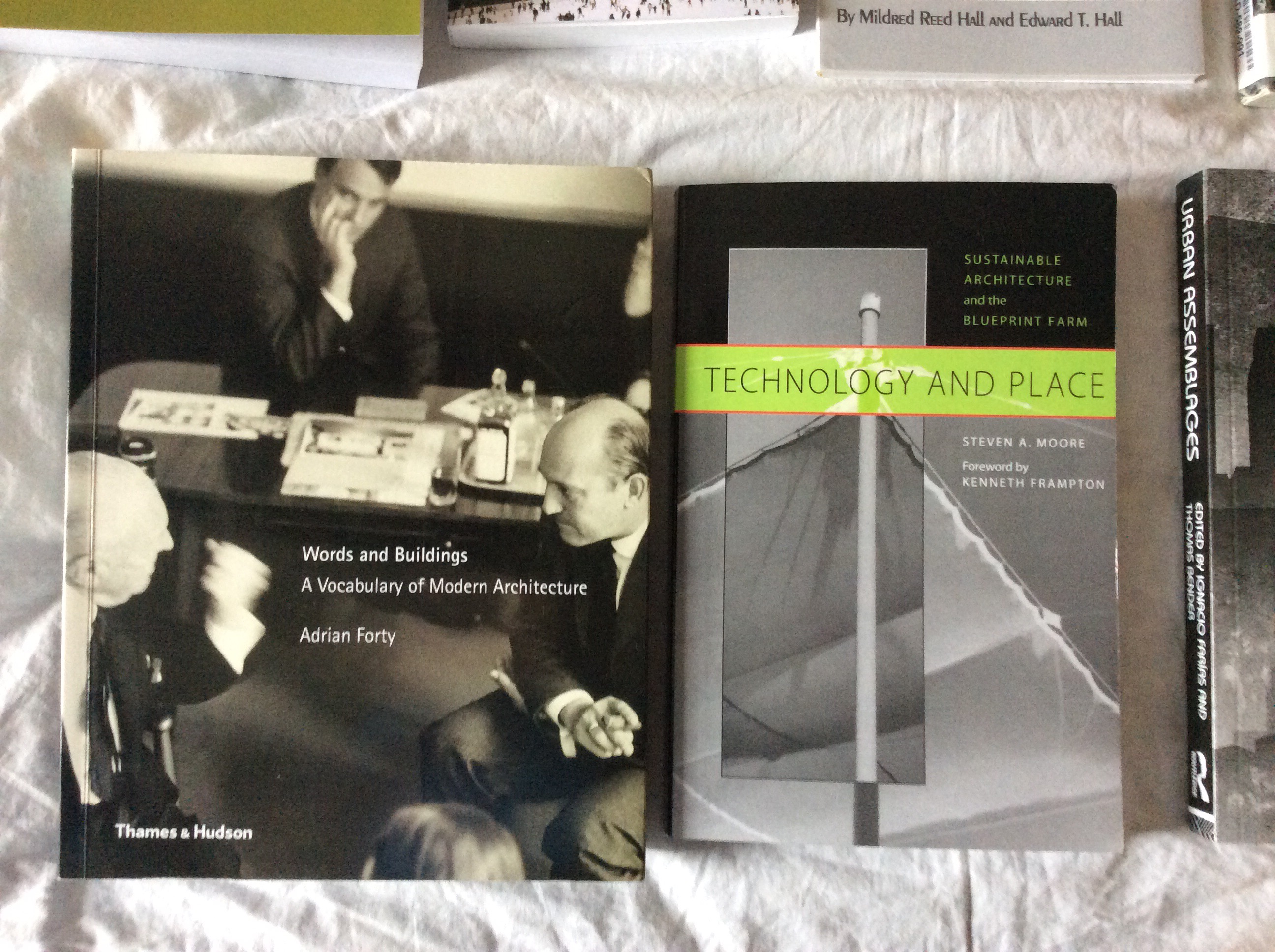
My primary research is a forensic analysis of the language used when certain buidings are being discussed in the media. To do this I need to identify a case study such as the currently being demolished Birmingham Central Library. This case study will also be analysed using Actor Network Theory, and the story told via reception at completion, use, the battle over its future, and the process of demolition. The language is to be analysed via Critical Discourse Analysis.
Thesis statement – my position at the end of year 1

Lindisfarne – All Fall Down (Lyrics)
Written in 1972, the same year that Westgate House in Newcastle upon Tyne, and Trellick Tower in London were completed, the song is an ecological comment on the wide ranging demolition of late 19th and early 20th century buildings and the completion of the central motorway in Newcastle.
Councillors, magistrates, men of renown
Who needs to live in a dirty old town?
Yes, go on, tear it down
Who needs the trees and the flowers to grow?
We can have a motorway with motorway dough
I know, I know, I know, they’ve got to go
Tear them down, mess them round
Make a mockery of all of the ground
And if you ever have a sleepless night
Just count out your money, it’ll be alright
Politicians, planners, go look what you done
Your madness is making a machine of ev’ryone
But one day the machine might turn on
We’ll tear you down, mess you round
And bury you deep under the ground
And we’ll dance on your graves till the flowers return
And the trees tell us secrets that took ages to learn
We’ll tear you down, mess you round
And bury you deep under the ground
And we’ll dance on your graves till the flowers return
And the trees tell us secrets that took ages to learn
We’ll tear you down!
Introduction to my blog
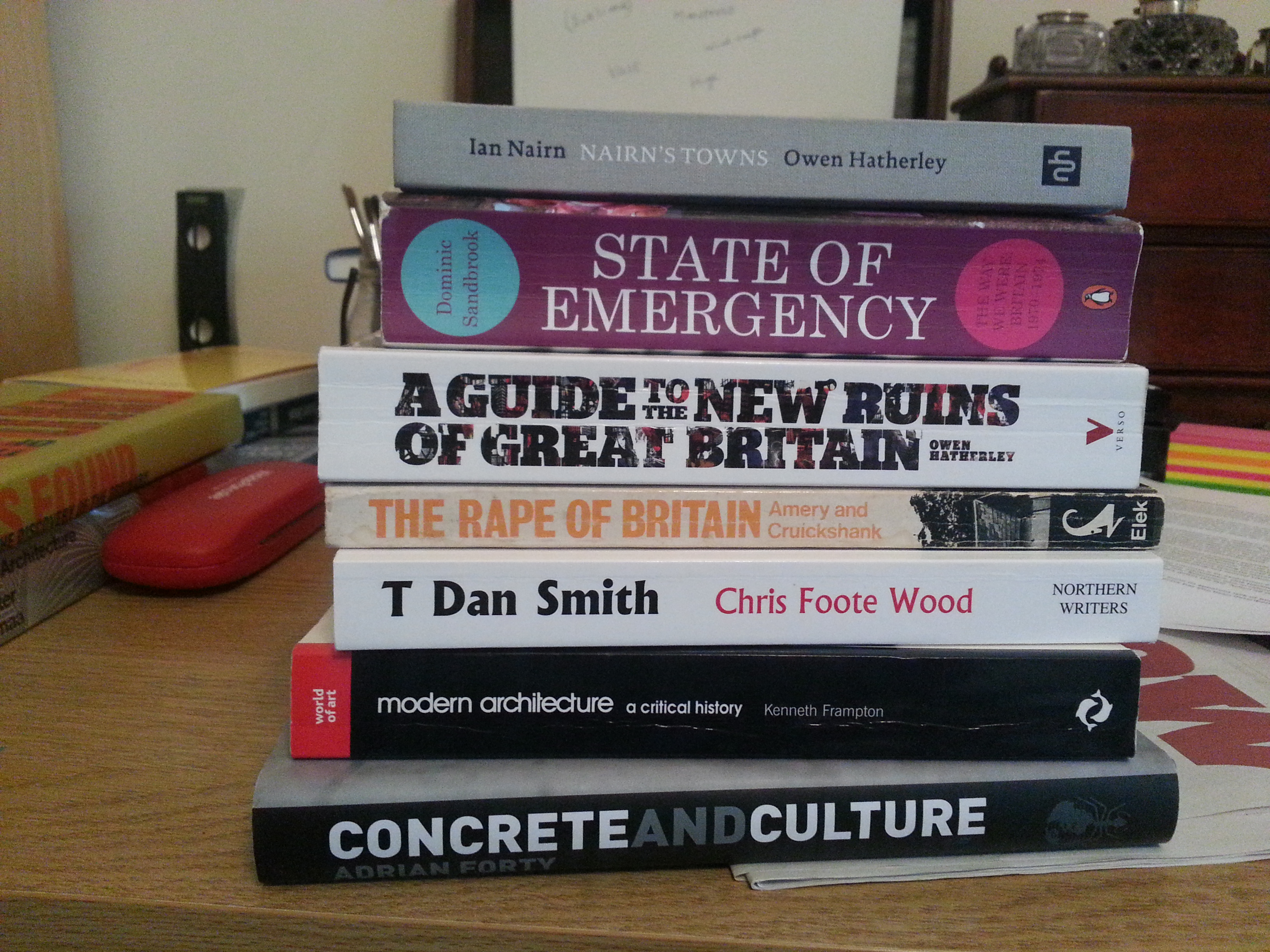
This blog will be the home of many of my thoughts and items of interest I have found that relate to my PhD “The politics of concrete” with the subtitle of “Its a brutalist monstrosity!”
 The politics of concrete